Coastal climate is difficult on a garage door in manner ins which just become obvious after a season or 2. Salt air infiltrates moving parts, wind stress tests every fastener, and repeated moisture cycles swell lumber, boring finishes, and invite corrosion. On the Gold Shore and throughout comparable seaside stretches, a garage door is not just a comfort. It becomes part of the home's weather obstacle, and during severe storms or cyclones it can end up being the distinction between a contained occasion and a significant architectural problem.
That is why preventive maintenance for garage doors deserves more attention than most homeowners offer it. Individuals have a tendency to observe the door only when it sticks, grinds, or refuses to shut. Already, the damages has actually typically been developing for months. In a coastal climate, tiny problems take a trip promptly. A seal that has lifted at one edge allows wet air and particles. A loose track produces unequal loading on rollers. A garage door electric motor that appears a little stretched can wind up failing at specifically the wrong time, typically after a storm, when emergency fixings are in greatest demand.
The useful objective is simple. Keep the door running efficiently, maintain the opening sealed, and see to it the entire setting up prepares to withstand high winds. That implies normal examination, prompt maintenance, and a practical prepare for tornado season.
Why seaside conditions reduce the life of a garage door
Salt and wetness are ruthless. Even when the door looks penalty from the street, the equipment can be silently wearing away. Hinges, braces, springtimes, tracks, and bolts all encounter even more corrosion near the coast than they do inland. If the building sits where sea air is strong and continuous, the rate of wear can be remarkably quickly. I have actually seen galvanized components that need to have in 2014 begin to match early since nobody washed or examined them, and the first evident sign was not rust, yet bad movement.
Wind is the other significant variable. A garage door is a vast surface area, and wind pressure does not require a full-on cyclone to trigger difficulty. Throughout extreme storms, the door can flex, rattle, and pressure versus its supports. Queensland advice is clear that garage doors are a well-known weak point in cyclones, and that they need to be appropriately rated for wind stress or fitted with a suitable supporting system when cyclone problems are coming close to. If the door is not effectively maintained, its capacity to do that task goes down sharply.
There is also the issue of the whole home envelope. Queensland federal government products note that garage door failing can harm bordering walls, ceilings, and roofing cladding. That matters due to the fact that once the opening paves the way, wind can get in the house and transform the pressure profile inside. What begins as a failed door can become a much larger structure problem.
What preventive upkeep in fact looks like
The finest upkeep routine is practical as opposed to technological. Many home owners do not require to take apart the door or begin rating springtime stress. What they do require is a regular, tranquil inspection routine that captures wear very early and maintains the door in good functioning order.
A valuable strategy is to think in terms of five areas: the surface area, the seals, the moving hardware, the opener, and the framework around the opening. If those five are sound, the door is typically in much better form than the ordinary seaside garage door.
The surface area need to be checked for damages, warping, loose panels, or indications that the door no longer sits uniformly. On sectional doors, panel joints are entitled to close attention. On roller doors, try to find smooth traveling and any type of waviness that suggests the drape is not rolling correctly. Turn doors should close squarely and not lean to one side.
The seals matter more than many individuals recognize. Brisbane and Queensland preparedness assistance both highlight examining seals and door frameworks as component of maintaining the home envelope undamaged. A hard base seal or a broken side seal may seem minor, yet it allows wind-driven rain, grit, and bugs into the garage. In time, that dampness can service equipment, stored products, and the lower edge of the door itself.
Moving components need regular eyes-on assessment. Tracks must be lined up, rollers must move easily, and springtimes or cords must reveal no noticeable damage. I constantly tell home owners to pay attention as much as they look. New grinding, screeching, or hesitation usually indicates something has changed. A door that instantly needs more initiative from the garage door electric motor is not simply frustrating. It might be informing you that rubbing has actually enhanced, equilibrium has changed, or an element is wearing unevenly.
The opener deserves its very own focus. A garage door motor that pressures, waits, or makes unknown sounds might still function today and fail throughout the next storm cycle. Batteries in remotes need to be examined, clever controls should be checked if installed, and the opener needs to be validated to respond constantly. If the door is much heavier than it should be, the opener will not make up forever.
Seasonal behaviors that pay off
Coastal maintenance functions best when it is linked to the schedule. There is no demand to overcomplicate it, however a light, consistent rhythm avoids the sort of problems that come to be emergency repairs.
One great behavior is a brief regular monthly assessment throughout the warmer, wetter months, when moisture and storm activity are more probable to subject weak points. A second, more in-depth check before storm period makes good sense for homes in subjected areas. Queensland tornado preparedness guidance stresses the significance of preparing yourself prior to extreme weather condition shows up, not after warnings are already intensifying. That advice applies straight to garage doors.
Here is an easy pre-season checklist that suits a single walkaround:
Check that the door opens and shuts efficiently without grinding or hesitation. Inspect seals for breaking, flattening, or spaces at the bottom and sides. Look for rust, loosened bolts, or visible wear in tracks, hinges, and brackets. Test the garage door motor and remotes so there are not a surprises during storm prep. Confirm that the door closes completely and sits equally against the frame.That is not a substitute for appropriate maintenance, however it catches an unexpected number of problems early.
Storm readiness is not the like regular maintenance
A garage door can function completely on an average day and still be at risk in tornado problems. Coastal homeowners frequently learn this the hard way since the door appears fine up until the weather condition turns. Routine upkeep maintains it moving. Tornado preparedness keeps it from becoming the weak link in the house.
Queensland readiness product particularly encourages homeowners to safeguard doors, windows, and outside items prior to extreme climate. For garage doors, that means examining whether the door follows AS/NZS 4505 and is properly ranked for wind stress, or whether it has a proper supporting system for approaching cyclone problems. The factor is not theoretical compliance. It is physical resilience. If the door was installed years earlier, or replaced without interest to cyclone requirements, it deserves assessing prior to the following tornado season.
Homeowners occasionally presume that a heavy door is automatically a strong door. That is not constantly real. Toughness depends on the total system: the panels, the tracks, the fixings, the opener, the frame, and any type of bracing. A door can look significant but still fall short if it is poorly kept or not ranked for the regional conditions.
If substitute gets on the table, Queensland government support keeps in mind that replacing non-compliant garage doors can enhance cyclone strength. That is not a laid-back upgrade. It is a major architectural renovation, and it frequently makes even more feeling than repeatedly covering a door that was never ever matched to the environment.
When a little issue becomes an immediate one
Some problems can wait a week. Others must relocate rapidly, particularly in seaside weather condition. A busted spring, a damaged cable television, a door that will certainly not shut properly, or a motor that delays repeatedly can develop into an urgent scenario quickly. If a storm is approaching, these are not the kind of faults to postpone.
Emergency repair work are typically required after wind, salt spray, or influence has actually impacted the door. Even if the door seems operating, a bent track or loosened up brace can produce concealed risk. The door might work one or two times, after that jam halfway on the third cycle. In a tornado context, that is not the minute to uncover the problem.
The useful judgment telephone call is this: if the door no more opens and closes smoothly, if the equilibrium appears off, or if there chain-drive opener is visible architectural damages, stop relying upon it as if nothing has actually changed. It is far better to set up repair work before the weather condition gets worse than to force the door into solution and make the damage larger.
There is also a safety and security issue with diy initiatives. Numerous home owners search for exactly how to repair a garage door after something begins falling short. Basic troubleshooting is fine, however springs, cords, and architectural supporting are not the area for uncertainty. Those parts hold tension or maintain the door stable under lots. If they are incorrect, the repair work can produce extra difficulty than it addresses. A practical proprietor can clear debris, check seals, and examine the opener. Anything beyond that needs to be dealt with carefully.
Materials, hardware, and the realities of seaside wear
Not all garage doors age similarly. Coastal conditions subject distinctions that are easy to miss on a product brochure. Roller doors, sectional doors, and tilt doors each have their very own upkeep demands.
Roller doors are prominent since they are sensible and compact, however their guides and moving parts still require interest. Salt and dirt accumulate over time, and the door can begin running noisily or unevenly. Sectional doors provide great functionality and can be a strong suitable for numerous homes, but panel joints, hinges, and rollers produce even more points that require checking. Turn doors are mechanically easier in some respects, but they still rely on appropriate balance, safe placing, and an audio frame.
The surface matters also. Coastal sun and dampness are a difficult mix, and as soon as surface area security breaks down, rust moves much faster. A home owner that notifications fading, peeling off, or early rust must not treat it as cosmetic only. It usually indicates that the safety layer is stopping working, which means the underlying product is extra subjected to weather.
Even the garage door electric motor can be affected indirectly. If the door itself ends up being more difficult to move due to rust, misalignment, or harmed hardware, the opener lugs additional tons. Motors are not developed to compensate forever for a mechanically exhausted door. What resembles a motor issue might really be a balance or hardware trouble upstream.
Security and sealing go hand in hand
In seaside areas, individuals often believe first regarding tornados and forget the daily safety role of the garage door. Yet the two problems overlap. A well-maintained door is harder to require, much less most likely to rattle loose, and a lot more resistant to tampering. Queensland protection layout product describes roller doors, anti-tamper features, and padlockable locking systems in protected applications, which is a reminder that security and safety usually rise together.
Sealing becomes part of this as well. A door with voids is not only more subjected to weather, it is easier to probe, noisier in solid winds, and much less reliable as a boundary. If the structure and seals are in good problem, the opening really feels tighter, quieter, and more secure. The benefit is not significant on a warm day, yet during an extreme tornado the distinction can be obvious.
Homeowners that respect safety needs to consider the whole opening, not simply the lock on the garage door. Tracks, side seals, bottom seals, and the stability of the frame all matter. A protected system is normally a maintained system.
Deciding between repair service and replacement
There is a factor where repeated patching quits making sense. Coastal weather condition speeds up that choice. If the door has persisting corrosion, relentless discrepancy, duplicated opener strain, or an age that puts it well behind current storm assumptions, replacement might be the wiser financial investment. Queensland assistance on resilience is a helpful marker here. If the door is not compliant, not appropriately ranked, or otherwise suitable for cyclone conditions, replacing it can materially improve the structure's capability to endure severe weather.
That does not indicate every worn component needs a brand-new door. An excellent specialist can typically bring back solution with targeted repair work. A broken seal, a weary roller, a worn cable television, or a having a hard time garage door electric motor might be enough to justify repair service instead of substitute. Yet if the fundamental framework is jeopardized, or if the door has actually become a persisting powerlessness, more repair services can just delay the inevitable.
The right choice generally comes down to three questions. Is the door mechanically appear? Is it fit to local wind problems? And is the price of continued repair services beginning to resemble the cost of a better long-lasting option? In a seaside environment, that 3rd inquiry often matters greater than individuals expect.
What a correct inspection need to actually catch
A post-storm or pre-season assessment is not simply a glance at the door from the driveway. It ought to reveal whether the system is still lined up, sealed, and secure to make use of. Tornados can loosen up fixings, shift tracks, damage seals, and subject concealed deterioration. Even if the door endured without evident damage, it deserves inspecting prior to putting it back under routine use.
A careful evaluation ought to take a look at the framework, the tracks, the seals, the rollers, the opener, and the noticeable problem of the panels or curtain. It ought to likewise consider exactly how the door sounded and behaved before and after bad climate. New vibration or friction is a hint. A door that sits a little misaligned after a storm might still open up, but that does deficient healthy.
If damages is located, withstand the temptation to require the door through a couple of more cycles. That is how a tiny distortion ends up being a jammed track, a damaged wire, or a fallen short opener. Emergency fixings usually begin as a hold-up in managing visible caution signs.
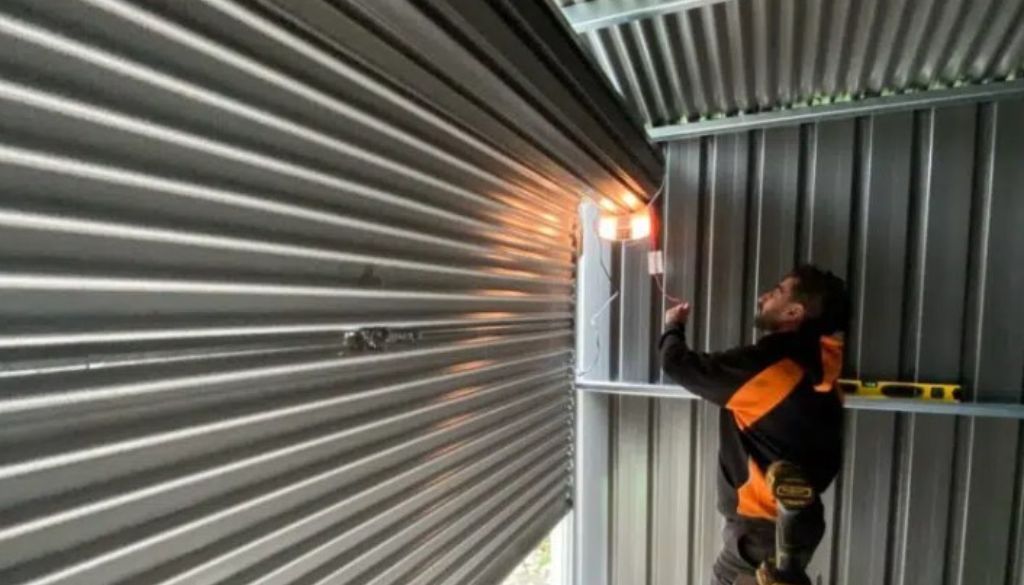
A maintenance attitude that really works
The homes that deal ideal with seaside weather usually have owners that pay attention before points stop working. They do not await rust to end up being structural, or for a noisy opener to quit totally. They care for the door because they recognize what it is protecting. That attitude is particularly vital on the Gold Coastline and in various other locations where solid winds and extreme tornados are part of life, not uncommon anomalies.
Good preventative upkeep for garage doors is not made complex, yet it does need garage door repairs near me prices self-control. Keep the door clean enough to discover changes. Examine seals and frameworks. Watch for corrosion. Test the electric motor. Focus on equilibrium and noise. Deal with storm period as a deadline, not a history problem. And if the door is no more suitable for the wind lots it might face, do not cling to it out of habit.
A garage door that is serviced appropriately, sealed appropriately, and matched to the neighborhood weather condition is quieter, safer, and much less most likely to require expensive emergency situation repair services when the forecast transforms serious. In seaside conditions, that is not a high-end. It is basic building sense.